this also happened to me when stated study flutter with Mac OS and Android Studio.
the reason is keymap for completion on IDE conflict to Mac OS.
You should change below keymap with other one on IDE or disable it on Mac OS.
Before providing any suggestions at least make sure that they are correct. I have seen multiple posts suggesting to use email report extension. But this does not work. There is no option to provide the FROM EMAIL. so it does not work. Stop pasting useless answers and wasting people's time.
Any indexed data structure can be used to store the elements. Unlike the LRU, the MRU does not need to hold the history. Keep an MRU variable with an index of the last used cache entry. Update it on hit and on replacement. Pick the MRU element when need to replace an element.
It appears that you are experiencing resource contention issues on your Databricks cluster, which is affecting the performance of your pandas aggregations. This issue is likely due to the way Databricks allocates compute resources among users and tasks. When another user is running intensive Spark I/O operations, it can consume a significant portion of the cluster's resources, leaving fewer resources available for your pandas operations. This can lead to extended run times and even cause the kernel to die and the notebook to detach.
Here are a few suggestions to mitigate this issue:
Resource Allocation and Quotas: Ensure that your cluster is configured with appropriate resource quotas and limits. You can request more quotas for your cluster or namespace if needed. Refer to the Tuning Pod Resources document for guidance on how to request and tune resources.
Cluster Configuration: Consider configuring your cluster to have dedicated resources for different types of workloads. For example, you can set up separate clusters for Spark and pandas operations to avoid resource contention.
Job Scheduling: Schedule your pandas aggregations to run during off-peak hours when the cluster is less likely to be under heavy load from other users.1
Monitoring and Optimization: Use the Container Resource Allocation Tuning dashboard to monitor CPU and memory usage. Adjust the resource requests and limits based on the observed usage patterns to ensure that your application has the necessary resources to perform efficiently.1
Cluster Scaling: If your workload requires more resources than currently available, consider scaling up your cluster by adding more nodes or increasing the size of existing nodes.
Alternative Approaches: If rewriting the code to leverage PySpark is not feasible due to overhead, you might explore other distributed computing frameworks that are more lightweight and better suited for smaller datasets.
By implementing these strategies, you can improve the performance and reliability of your pandas aggregations on Databricks, even when other users are running intensive operations.
Preventing SQL injection in Python with MySQL is essential for maintaining the security of your application. Here are the best practices to mitigate SQL injection risks:
A) Use Parameterized Queries
Parameterized queries ensure that user input is treated as data, not executable code. Use a library like mysql-connector or PyMySQL for this purpose.
The second variable is the temp variable that will temporarily keep the value until the next iteration, as because ADF just doesn't allow a variable to reference itself :(.
You can set an HTTPS address of your localhost as a valid URL for a Telegram web app application; it just needs to be an HTTPS address.
For example, in Next.js, you can launch your application with the --experimental-https flag, which will generate a self-signed certificate. After that, you can set the address https://127.0.0.1:3000 for your web application in @BotFather, and it will work just fine.
As the person responsible for reporting the unwanted behaviour with Special Keys last year, I'm happy to take responsibility for the change that led to your current issue.
The fix done by the team solved a long-standing issue with unwanted behaviour affecting many developers / users when the use of special keys was disabled.
Specifically, problems can occur if special keys are disabled during development work. For example, unticking Allow special keys prevents the use of Ctrl+Break to stop code. This is intentional.
However it has the unintended side effect of preventing breakpoints and the use of Stop from pausing execution.
By comparison, your usage seems very marginal / unusual
I'm confident wha\t you are seeing has nothing to do with Windows 11. That observation may be coincidental with the fix being applied in Access version 2305 (released on 1 June 2023)
I have the same problem.
can you please add an example of the query on the gateway, and how the Stiching.graphql file has been configured?
Thanks in advance.
Maurizio
Yes, you can nest a button in an SVG by embedding HTML elements within a tag. This allows you to include standard HTML within an SVG. Here's a simple example to illustrate this:
.
Remember to adjust the x, y, width, and height attributes as needed to position and size the button appropriately within your SVG.
If you have any specific requirements or further question
It only seems to work if the same name as the issuer is used in the OTP URL and a corresponding XML file with this name is stored in the APK files (see user3620439's list)
I've just handled this exact situation by combining both the Google Places (new) API, and the Google Address Validation API.
The Address Validation API handles PO Boxes (at least in the US.)
So, I simultaneously do a Places request to get partial, autocomplete matches and an Address Validation request to check for exact matches. Usually a PO box with a zip code is enough to get an exact match.
I landed here from Google. Same error message but a different fact pattern.
My development environment is Visual Studio on Windows, and the output executable needs to run on Windows and Linux. The Linux executable is built using WSL (Ubuntu).
The problem turned out to be a file that was recently added. One of the letters in the name was upper case on the filesystem, but CMakeLists included it as lower case (sourcefile2.cpp vs. sourceFile2.cpp).
And the problem was only in one out of more than a hundred files. CMake error message was still the same "No source given to target"
You are not awaiting in the initial for loop so setRouteHeader is called multiple times simultaneously. This causes the find and update operations to overlap causing what you have observed here. To fix it wrap the for loop in an asynchronous function and add await before calling setRouteHeader then call this asynchronous function
is this engineering graphics where you are drawing various projections of an object from different directions?
if yes then follow the following schematic
orthographic projection
bottom
right | front | left | rear
top
and these would all be connectable easily with just straight lines drawn from the frame of the object
We use init to initialize an instance of a class, and self refers to the instance itself, allowing us to set or access its attributes. Together, they ensure that each instance has its own unique data and behavior.
I suggest considering LM-Kit.NET, a native .NET SDK that offers fast LLM inference and function calling support without the need for external server applications or experimental assemblies.
Yes, you're right. The Azure App Service load balancing option SiteLoadBalancing.LeastRequests employs the "Least Active Requests" strategy. This approach ensures that new incoming requests are routed to the instance currently handling the fewest active requests.
If you put this code inside a test class... and set two breakpoints at the arrange and assert calls, you will be able to use the diagnotics window in VS2022 to inspect the details
struct ExampleStruct
{
    public int ID;
    public List<ExampleStruct> children;
}

public class StackOverflowStructQ
{
    [Fact]
    public void Method_Condition_Expectation()
    {
        // Arrange
        ExampleStruct es = new() { ID = 1, children = [] };

        // Act

        // Assert
        Assert.NotNull(es.children);
    }
}
The when the first breakpoint is hit - "take a snapshot" from the Diagnostics window.
You should be able to drill down and see "Referenced Objects". This means the reference is stored in the struct, but the object it references is stored on the heap.
So try and keep your structs lightweight. If you need to reference objects which will ultimately reside on the heap, probably best to use a class?
I just had the same issue and error message with VScode (I'm on Windows 10, vscode 1.95.3). I restarted my machine (Start menu -> power button -> Restart option) and that fixed the issue for me.
Mentioning in case anyone else runs into this issue, don't skip restarting just because it didn't work for the author.
Our application has met the same issue.
In order to fix this, you can modify the microsoft edge policies in GPEdit:
GPEdit -> Computer Configuration -> Administrative Templates -> Microsoft Edge -> Restrict exposure of local IP address by WebRTC -> Enabled -> Allow public and private interfaces over http default route.
using configuration via INI file is perfect when runniung python script during runtime.
When starting my script in rc.local I get KeyError and script is aborted:
Nov 21 14:59:54 RaspiJura4 rc.local[916]: fileConfig('logging.ini')
Nov 21 14:59:54 RaspiJura4 rc.local[916]: File "/usr/lib/python3.11/logging/config.py", line 71, in fileConfig
Nov 21 14:59:54 RaspiJura4 rc.local[916]: formatters = _create_formatters(cp)
Nov 21 14:59:54 RaspiJura4 rc.local[916]: ^^^^^^^^^^^^^^^^^^^^^^
Nov 21 14:59:54 RaspiJura4 rc.local[916]: File "/usr/lib/python3.11/logging/config.py", line 104, in _create_formatters
Nov 21 14:59:54 RaspiJura4 rc.local[916]: flist = cp["formatters"]["keys"]
Nov 21 14:59:54 RaspiJura4 rc.local[916]: ~~^^^^^^^^^^^^^^
Nov 21 14:59:54 RaspiJura4 rc.local[916]: File "/usr/lib/python3.11/configparser.py", line 979, in getitem
Nov 21 14:59:54 RaspiJura4 rc.local[916]: raise KeyError(key)
Nov 21 14:59:54 RaspiJura4 rc.local[916]: KeyError: 'formatters'
Is there any idea how to solve this?
Best regards
Pit
Reasons:
Blacklisted phrase (0.5): Best regards
Blacklisted phrase (1): regards
Blacklisted phrase (1): Is there any
Blacklisted phrase (1): how to solve
RegEx Blacklisted phrase (1.5): how to solve this?
The issue has been identified, and the fix will be included in the next patch. The release is scheduled to be available within the next two weeks. Please stay tuned for the update, and thank you for your patience!
In each communication point you pass the current time and the step length as argument to the fmi2DoStep function. This error message means that in the following step, the time of the communication point t_{i+1} is not exactly equal to t_{i} + delta_t. So, most likely this is a truncation error of the master algorithm.
You could replace the computation of the next communication point by a getReal call to receive the communication time computed by the FMU after each doStep call.
If you cannot modify the master algorithm, you have to contact the support to let the developers fix it.
Discuss with your backend developer to merge the APIs into a single request that returns all the required data in one response, or reduce it from 4 to 2 or something like that. For example, if one API fetches homepage details and another fetches user details, pass user-specific parameters in a single request and get everything at once.
Optimize Frontend Loading:
If combining APIs isn't possible, prioritize loading essential data first. Use shimmer placeholders or similar for sections dependent on secondary APIs. Fetch secondory prioritized data in background using asynchronous updates (e.g., StreamBuilder or FutureBuilder).
Caching:
Cache static or semi-static data to reduce repeated API calls.
UI Optimization:
Simplify widget trees for complex designs and avoid unnecessary rebuilds
For me, the issue was probably that I had a number of very old virtual environments lying around that I hadn't used in years. Deleting all of them solved the problem.
You can partition your Hudi table based on time intervals (e.g., year, month, day) to optimize storage and query performance.
This enables efficient querying of data within specific time ranges.
a short answer: you shouldn't try to bypass without authorization.
Try to reach out their customer service. sometimes they can offer an access through API
"Based on factors such as information security and protecting the value of website content, this site gives permission to stop access to uncertified robots, crawlers and other unnatural human access behaviors."
"How to remove restrictions
Please stop non-human access to this website in the network environment, record the following blocked connection information, provide contact information to contact our customer service, and request us to lift the access restrictions.
In addition, if you have business needs and need a certified crawler to access this website in a non-human way, please contact our customer service and we will have a business window to explain the cancellation to you."
In configuration select: ""C++ Universal Windows Platform.."
in C:\Program Files (x86)\Microsoft SDKs\Windows Kits\10\ExtensionSDKs\Microsoft.VCLibs\14.0\Appx\Debug\x64, you should have desired version of Microsoft.VCLibs.140.00.Debug
the second option is:
Remove old version (whole folder): C:\Program Files (x86)\Microsoft SDKs\Windows Kits\10\ExtensionSDKs\Microsoft.VCLibs
Open configuration in text editor and add this package:
"Microsoft.VisualStudio.ComponentGroup.MSIX.Packaging",
"Microsoft.VisualStudio.ComponentGroup.WindowsAppSDK.Cs"
in C:\Program Files (x86)\Microsoft SDKs\Windows Kits\10\ExtensionSDKs\Microsoft.VCLibs\14.0\Appx\Debug\x64, you should have desired version of Microsoft.VCLibs.140.00.Debug
LinkedIn's API rate limit is indeed challenging, especially for apps displaying analytics using Pages Data Portability. The main issue is that the rate limit is application-wide, not user-specific. This means:
Whether your app has 1 user or 1,000 users, the limit remains the same.
If one user exhausts the quota, all other users are blocked until the quota resets.
Use LinkedIn for OAuth Only: Instead of fetching analytics, limit LinkedIn usage to authentication and explore other data sources for insights.
Feedback to LinkedIn
It would be helpful if LinkedIn introduced pay-as-you-go plans or user-specific rate limits. This would make the API more suitable for real-world, multi-user applications.
A solution is to implement the bridge between your renderer and Node can be done through the preloader and IPC. I still don't know why the considerably less tedious way to do it - as listed in the question - does not work, but not a lot of traction on the question to find that out.
😭 I found a way and it's working as intended. I am still not sure if it's right method (since I am new to vhost customization and all) but here you go:
I just edited the vhost files for my example.com for port 80 (vhost.conf) in litespeed folder.
What I changed in the file was a simple line of code:
ca file(s) might not be available under your control panel's ssl folder. Mine works even when I omit the ca key-value pair.
P.S. Last night copilot broke my brain after serving me an answer where the code asked http and https to listen to port 30000, and then copilot itself said one port cannot be assigned to two different things. 😭 I quit copilot then and there.
VS Code has an auto-wrapping feature that wraps lines at a certain column width. This is useful when you're working with long lines of code or comments.
Press Alt + Z (Windows/Linux) or Option + Z (macOS) to toggle Word Wrap. This will automatically break long lines to fit within the editor window, making them easier to read without changing the code.
You asked why, and there's no way to do this without a wall of text, so here's your wall of text:
I'm not about to find out where, because quite frankly your method to get to the result is very convoluted, but somewhere in your network of filters and lookups, the cell containing -20, is being processed by a function that is either instructed to read it as text ("-20"), or the function itself is text-based in origin, and will therefore read and store any input as text.
This all happens as an array in memory.
Secondly, you've stumbled upon the hidden, secret difference between an array and a range. Simply put, an array can only exist in memory to be remembered and manipulated, or transfered to a new array, and finally, by the function, one or any or all of these arrays can then be written to a range of cells.
A range can't do any of that, it's more like a piece of paper you printed the result onto. If your function doesn't actually print data to cells, it's not a range, but an array. If you cannot see the range in your sheet, it doesn't exist.
RELEVANT: You (smartly) put EffectiveScore in Name Manager, so you could ezpz refer to it. It is essential to understand that EffectiveScore is calculated and stored as an array in memory. It doesn't exist as a range before you enter =EffectiveScore in a cell, and the function prints over 3 rows: 100, 80, 100.
Before you do that, this is what is stored in memory: 100, 100+"-20", 100.
You may not see them as this, because you're thinking "I'm just doing math here, lol", but + and - are functions, just like SUM(). Unlike the SUM() function though, they are instructed to convert/read all inputs as numbers.
When you enter =SUM(EffectiveScore), the range of EffectiveScore doesn't exist yet, so the SUM function uses the array stored in memory, which includes -20 stored as text. It skips that because "text isn't math, lmao", and writes 300 to your cell. When you add the +, you're instructing the SUM() function to read all inputs as numbers. Now it becomes 100, 100+-20, 100, which equals 280.
You can get the same effect by doing =SUM(NUMBERVALUE(EffectiveScore)).
It's the same thing that happens here:
=1=1 will return TRUE, because both are 1, and both are numbers.
="1"=1 will return FALSE, even though both are 1, the first is a text string, and the other a number.
=NUMBERVALUE("1")=1 will return TRUE, because NUMBERVALUE() converts it's text-string-intestines to a number.
=0+"1"=1 will return TRUE because as previously exlained, the + function converts text "1" to a number: 1.
If BLAS threading cannot be controlled and persists with multithreading, consider using explicit parallel processing to ensure proper thread control. For example:
Turns out I was simply using a wrong command line to run the playbook: ansible-playbook -i inventory.yml tasks/main.yml instead of ansible-playbook -i inventory.yml playbook.yml.
After that the error messages became much clearer and my final playbook looks like:
---
- name: Play
  hosts: all
  become: true
  roles:
    - /home/marco/play/roles/ics-ans-orca-driver
Alright, i found the issue. To avoid the problem I had to add a backlink to the ToMany property in order to make it work properly :
@Entity()
class MyObject {

@Backlink('holderObject') // This was missing
final insideObjects = ToMany<InsideObject>();

MyObject({
 this.name,
});

...
}
Here the foc info from objectbox :
When using @Backlink it is recommended to explicitly specify the linked to relation using to. It is possible to omit this if there is only one matching relation. However, it helps with code readability and avoids a compile-time error if at any point another matching relation is added (in the above case, if another ToOne is added to the Order class).
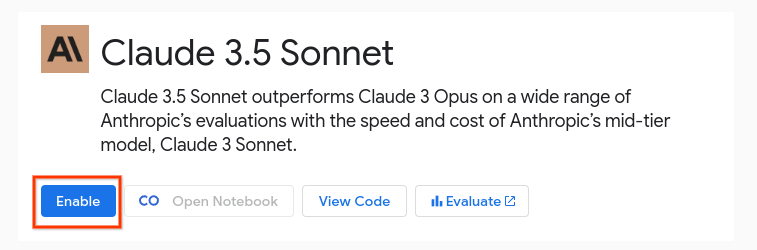
Using your account in this link you may click the “Enable” button to start using Claude Sonnet 3.5.
Here’s additional public documentation link for Anthropic Code Cookbook: Check out example code for a variety of complex tasks, such as RAG from various web sources, making SQL queries, function calling, multimodal prompting, and more.
It seems that clearing events from a 'secondary' calendar is currently not possible, even for users with elevated roles like Calendar Admin or similar.
While you can delete, create, and modify calendars or events, attempting to clear all events from a secondary calendar using the following endpoint:
try running the same step after a few seconds (sometimes 2s is not enough to element to load)
check if you are interacting with the correct window/tab
verify if there are no "spaces" in the text
try using contain:
bot.FindElementByXPath("//div[contains(text(), 'IMECall')]").Click
check for iframes (I had many problems with that when I was learning to use selenium with vba)
check if there is a tag "iframe" in devtools. if the element is inside a frame:
dears, thanks for sharing knowledge. I noticed that when using concat OR & in excel, the double quotes in source cells if any, gets repeated when we copy paste the result to plain text or notepad. But if you just copy paste into a word document then the values show up perfectly fine.
The Premium Reporting API provides a PAT (Personal Access Token) exactly for this use case, letting you access their API from a server side, without having a user going through the 3-legged login dance.
I'm afraid the Data Visualization extension doesn't support rotating sprites. What you could do instead is, add custom HTML or SVG elements on top of the Viewer canvas, and use the Viewer SDK to make sure these elements stay "attached" to a specific XYZ position in the model space. We do this in the APS Digital Twin demo:
Hey Is there anyone who can guide me...actually I would like to know how to create a customer or supplier using the Twinfield API. Could you please guide me on the following:
What API endpoint or URL should I use for creating a customer or supplier in Twinfield?
What XML structure should I use in the request body to create a customer or supplier?
Are there any specific parameters (such as company ID, customer/supplier code, etc.) I need to include in the request?
What type of response should I expect after creating a customer or supplier?
Any insights or examples would be greatly appreciated! Thanks for your help!
Reasons:
Blacklisted phrase (0.5): Thanks
Blacklisted phrase (1): appreciated
Blacklisted phrase (1): guide me
Blacklisted phrase (1.5): I would like to know
Blacklisted phrase (0.5): I need
Blacklisted phrase (1): Is there any
Whitelisted phrase (-0.5): Thanks for your help
RegEx Blacklisted phrase (2.5): Could you please guide me
IMO, the best way to investigate your problem is to perform a large amount of requests and took a heapdump.
You analyse the heapdump with Memory Analyzer
You open the "Histogram" view
You add the column "Retained Heap"
You sort on "Retained Heap" column.
Now you have a better view of the object and memory repartition.
You can find the origin of different objects with a right click > List objects > with incomming references.
Incremental counting answered here depends on the grid items being in order and cannot deal with the irregular order caused by grid-auto-flow: dense and individual grid-row / grid-column.
Even if human isn't interested in pixel coordinates, script can convert them into grid indexes!
//// returnedArray[elmIdx] = {row: rowIdx, column: colIdx}
function measureGridIndexes(elms) {

  const coords = {row: [], column: []};  // The two will be very sparse arrays
  for (const [elmIdx, elm] of elms.entries()) {
    const x = elm.offsetLeft, y = elm.offsetTop;
    coords.row[y] ??= [];  // An array of element indexes at the same Y pixel coordinate
    coords.row[y].push(elmIdx);
    coords.column[x] ??= [];  // X ditto
    coords.column[x].push(elmIdx);
  }

  const gridIdxs = [];
  /// .flat() densifies a sparse array
  for (const [rowIdx, elmIdxs] of coords.row.flat(0).entries()) {
    for (const elmIdx of elmIdxs) {
      gridIdxs[elmIdx] = {row: rowIdx};
    }
  }
  for (const [colIdx, elmIdxs] of coords.column.flat(0).entries()) {
    for (const elmIdx of elmIdxs) {
      gridIdxs[elmIdx].column = colIdx;
    }
  }

  return gridIdxs;

}
Note, however, that this code only considers integer item coordinates.
And of course, this does not address cases where the position is further customized with individual margin, position, etc.
I wish no website would do such styling, which would throw away the advantages of grid layout...